 The EUREQA dataset
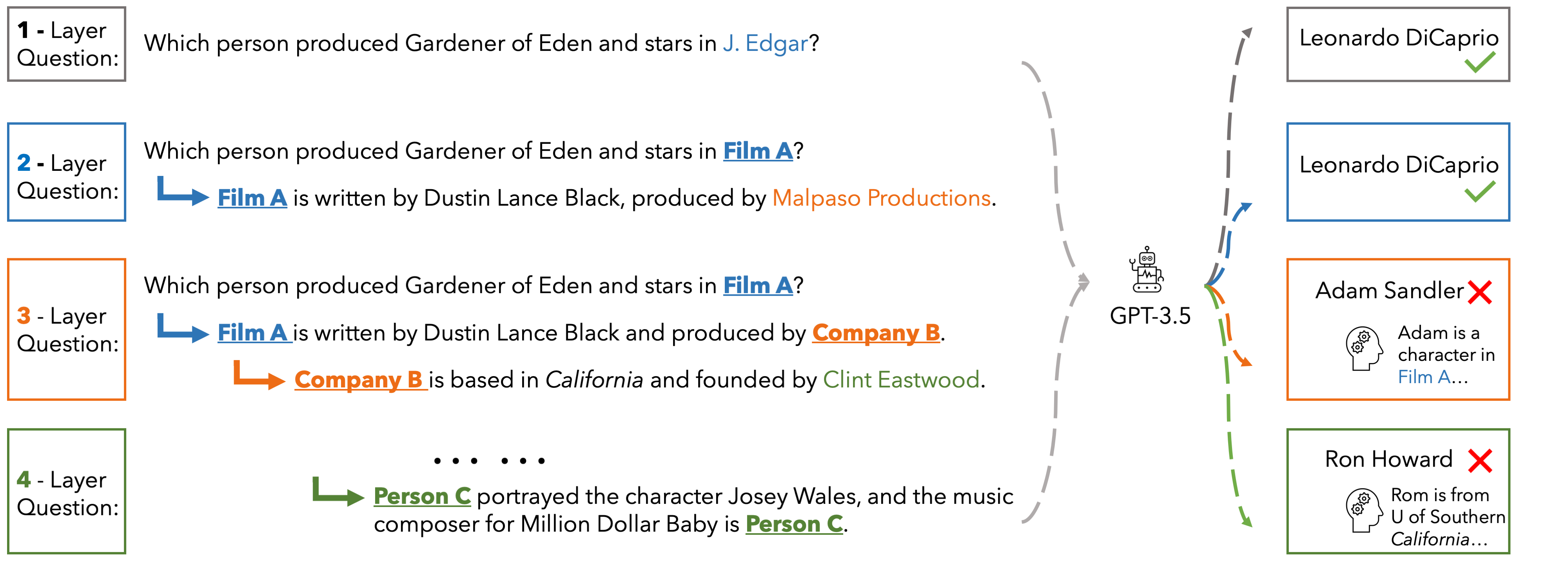
In EUREQA, every question is constructed through an implicit reasoning chain. The chain is constructed by parsing DBPedia. Each layer comprises three components: an entity, a fact about the entity, and a relation between the entity
and its counterpart from the next layer. The layers stack up to create chains with different depths of reasoning. We verbalize reasoning chains into natural sentences and anonymize the entity of each layer to create the question.
Questions can be solved layer by layer and each layer is guaranteed a unique answer. EUREQA is not a knowledge game: we adopt a knowledge filtering process that ensures that most LLMs have sufficient world knowledge to answer our questions.
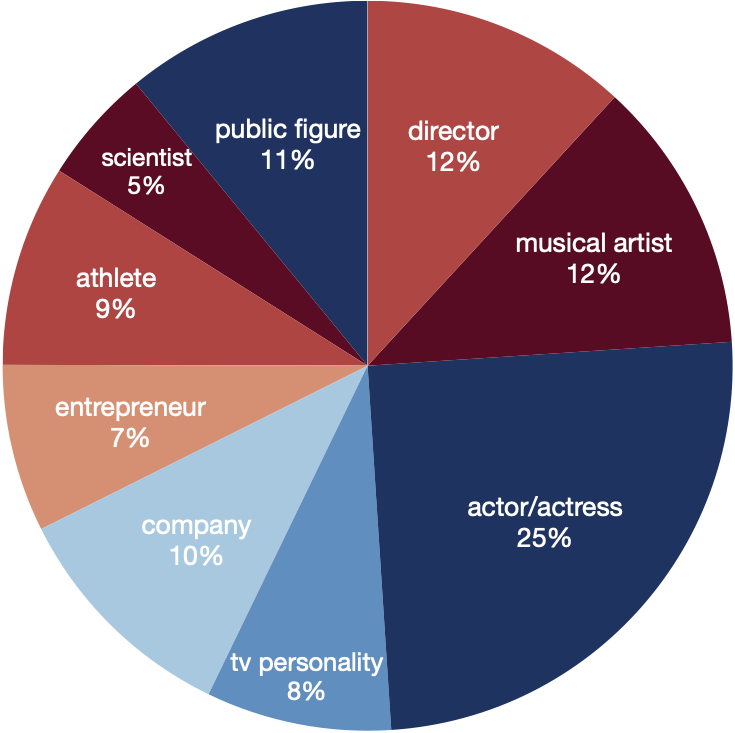
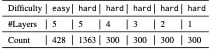
EUREQA comprises a total of 2,991 questions of different reasoning depths and difficulties. The entities encompass a broad spectrum of topics, effectively reducing any potential bias arising from specific entity categories.
These data are great for analyzing the reasoning processes of LLMs
Veterinary behaviorists (Diplomates of the American College of Veterinary Behaviorists) are scarce and expensive. Most general practitioners cannot refer easily, leaving many behavior problems untreated or poorly managed.
Veterinary science has long recognized that "mental" issues often have "physical" roots. This is where the collaboration is most critical. A veterinarian trained in behavior doesn't simply refer a fractious cat to a trainer; they run a full medical workup first.
At the pinnacle of this field is the . These are veterinarians who have completed a residency in behavioral medicine. Unlike a dog trainer (who modifies behavior) or a general practitioner (who treats disease), these specialists bridge the gap entirely. They can prescribe psychiatric medications (fluoxetine, clomipramine) while simultaneously designing environmental modifications and behavior modification plans.
He stepped back, stripping off his gloves. "This dog isn't 'dominant,' Sarah. He’s been living in a state of chronic, excruciating pain for months."
Why Veterinarians Should Understand Animal Behavior - Academia.edu
 Analyses and discussion
Veterinary behaviorists (Diplomates of the American College of Veterinary Behaviorists) are scarce and expensive. Most general practitioners cannot refer easily, leaving many behavior problems untreated or poorly managed.
Veterinary science has long recognized that "mental" issues often have "physical" roots. This is where the collaboration is most critical. A veterinarian trained in behavior doesn't simply refer a fractious cat to a trainer; they run a full medical workup first.
At the pinnacle of this field is the . These are veterinarians who have completed a residency in behavioral medicine. Unlike a dog trainer (who modifies behavior) or a general practitioner (who treats disease), these specialists bridge the gap entirely. They can prescribe psychiatric medications (fluoxetine, clomipramine) while simultaneously designing environmental modifications and behavior modification plans.
He stepped back, stripping off his gloves. "This dog isn't 'dominant,' Sarah. He’s been living in a state of chronic, excruciating pain for months."
Why Veterinarians Should Understand Animal Behavior - Academia.edu
This website is adapted from Nerfies, UniversalNER and LLaVA, licensed under a Creative Commons Attribution-ShareAlike 4.0 International License. We thank the LLaMA team for giving us access to their models.
Usage and License Notices: The data abd code is intended and licensed for research use only. They are also restricted to uses that follow the license agreement of LLaMA, ChatGPT, and the original dataset used in the benchmark. The dataset is CC BY NC 4.0 (allowing only non-commercial use) and models trained using the dataset should not be used outside of research purposes.