Linked By Gordon Korman Pdf May 2026
an early stage Building Information Modeller
for the rest of us, mere mortal architects
a little bit goes a lot further
It is free.
Download now!
an early stage Building Information Modeller
for the rest of us, mere mortal architects
a little bit goes a lot further
Linked Author: Gordon Korman Genre: Contemporary Realistic Fiction / Mystery Target Audience: Middle Grade (Ages 8–12) Themes: Antisemitism, History, Redemption, Activism, Friendship.
This shifting perspective prevents the story from becoming a simple “bully vs. victim” tale. Instead, it explores how good people can remain silent, how symbols carry weight beyond intent, and how healing requires action, not just time.
"Linked" is a novel that revolves around the lives of six high school students, each with their own unique online persona and struggles. The story is told through a series of emails, instant messages, and social media posts, which adds a layer of authenticity and immediacy to the narrative.
Maya ignored it. The next day, again: a collage of four photos—her backpack, the notebook with the doodled fox she always drew, a close-up of her hands threading a seam on a sweater. The caption: "Patterns." This time the tag included a question mark and the words: Who are you when no one’s watching?
By the time the bell rang, the chain reached the back doors. They were linked. And for the first time in weeks, Oakhaven felt like it belonged to everyone again. 📖 Key Themes of "Linked" Accountability
As more swastikas continue to appear, the mystery deepens, and the town’s dark history—including a 1978 event known as the "Night of a Thousand Flames" involving the KKK—begins to resurface. To combat the rising tide of hate, the students initiate an ambitious project: creating a paper chain with six million links to represent the Jewish lives lost during the Holocaust.

When designing, we need to be in touch with the various spaces we use. After all, we are not termites -- who live inside built matter of the walls. An architect is quite interested in knowing how the spaces are inter-related, and whether they
would work for our users. The walls come as a bye-product of having made these spaces.
TAD respects such an approach. That is why it is very easy to start designing directly in TAD itself. It is like having a scratch pad handy.
But if you think this is just a bubble diagramming too ... well, it is not. You can even create the entire model; including the built matter that is present in the building.
What it does NOT do is drafting. For that, you can easily export from TAD and use the regular CAD software that you were using earlier.
The adjoining photo shows the internal stack through the tiny row-house.
The west wall has a bit of glass blocks. It not just lights up the space
but it drives the air inside the stack. This is a intricate vertical space
that goes through the row house to provide ventilation -- all modelled
inside TAD
TAD helps you iteratively design. Like a potter at work. At any point in time, you can extract objective information such as areas, distances and so on. What is the point of designing a building only to realize at the final stages that some
mathematical criteria was not right?
This capability of querying into the design is very powerful. TAD has a built in language called "ARDELA" (ARchitectural DEsign LAnguage) That can be used to create add-ons to provide additional querying functionality. These add-ons probe into
your model and provide you answers.
We would be releasing a marketplace for these probes -- and also a simple way for you to write your own probes too
The adjoining photo, a small gazebo kind of space was carved out on the
terrace on one part of the split-level in the rowhouse. An ARDELA area
add-on (probe) did all the calculations. We were then confident that we
can get that semi-enclosed space, without it being counted by the municipality
(in India, these area calculations are known as FSI calculations)
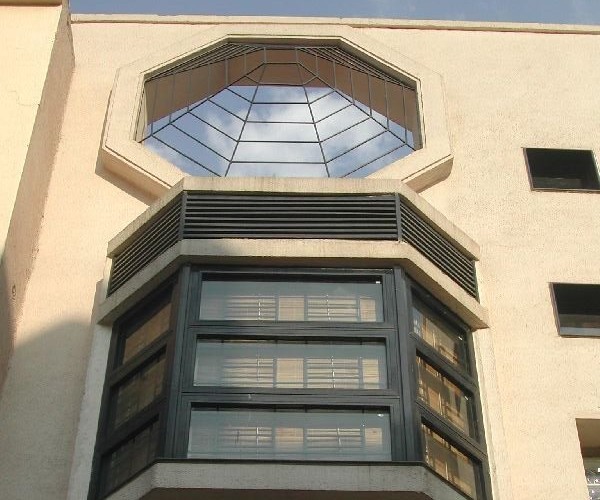
Over 3 million of actual built projects done over last 30 years. (From the office that created TAD) Scores of unbuilt ones
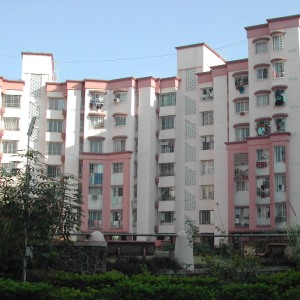
Nerul, Navi Mumbai, India
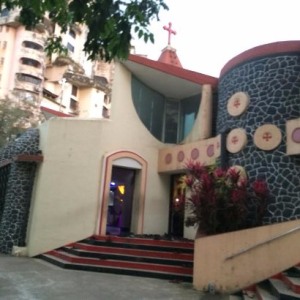
Nerul, Navi Mumbai, India
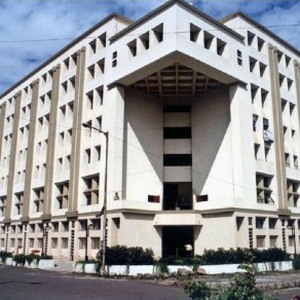
Nerul, Navi Mumbai
Linked Author: Gordon Korman Genre: Contemporary Realistic Fiction / Mystery Target Audience: Middle Grade (Ages 8–12) Themes: Antisemitism, History, Redemption, Activism, Friendship.
This shifting perspective prevents the story from becoming a simple “bully vs. victim” tale. Instead, it explores how good people can remain silent, how symbols carry weight beyond intent, and how healing requires action, not just time.
"Linked" is a novel that revolves around the lives of six high school students, each with their own unique online persona and struggles. The story is told through a series of emails, instant messages, and social media posts, which adds a layer of authenticity and immediacy to the narrative.
Maya ignored it. The next day, again: a collage of four photos—her backpack, the notebook with the doodled fox she always drew, a close-up of her hands threading a seam on a sweater. The caption: "Patterns." This time the tag included a question mark and the words: Who are you when no one’s watching?
By the time the bell rang, the chain reached the back doors. They were linked. And for the first time in weeks, Oakhaven felt like it belonged to everyone again. 📖 Key Themes of "Linked" Accountability
As more swastikas continue to appear, the mystery deepens, and the town’s dark history—including a 1978 event known as the "Night of a Thousand Flames" involving the KKK—begins to resurface. To combat the rising tide of hate, the students initiate an ambitious project: creating a paper chain with six million links to represent the Jewish lives lost during the Holocaust.

For far too long, we architects have not asked ourselves how we may do a better job in this world. Instead we just relied on some outside expertise and hand-me-downs. Let us rise and think for ourselves.