
Spd Flash Tool Bkf | Nv Error _verified_
secure communication for everyone
secure communication for everyone
Current version: 0.6.7a
Release notes
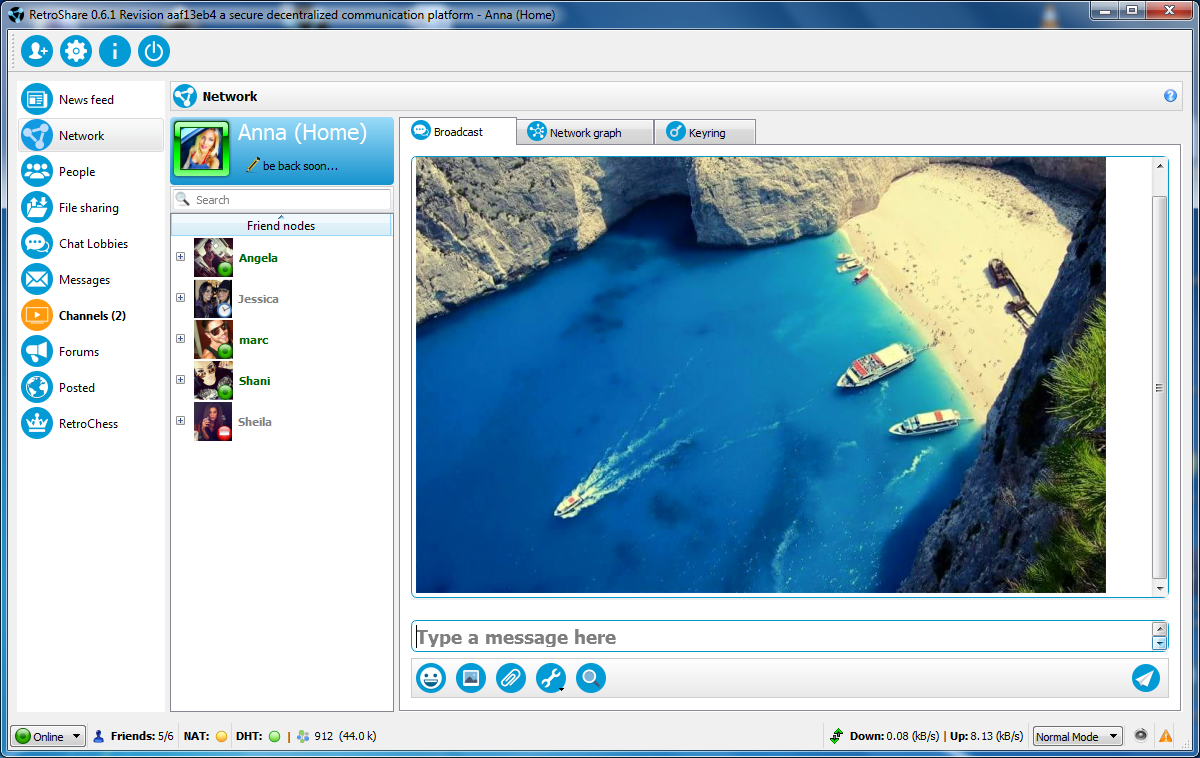
Retroshare establish encrypted connections between you and your friends to create a network of computers, and provides various distributed services on top of it: forums, channels, chat, mail... Retroshare is fully decentralized, and designed to provide maximum security and anonymity to its users beyond direct friends. Retroshare is entirely free and open-source software. It is available on Android, Linux, MacOS and Windows. There are no hidden costs, no ads and no terms of service.
In early 2010s Intel SPD Flash Tools (version 1.32), if you hexdump a valid BKF file, the bytes at offset 0x3E to 0x41 are 0x42, 0x4B, 0x46, 0x1A – which spells "BKF" plus a control character (SUB). This signature is documented in any public Intel manual. Some reverse engineers believe it was a developer’s initials (Brian K. F?).
The most reliable way to bypass this error is to disable the NV calibration check in the flashing tool settings. Disable Calibration Backup: SPD Upgrade or Research Download Tool and load your firmware file. (gear icon). Navigate to the Calibration Untick all items spd flash tool bkf nv error
The flashing process stops abruptly, or the device gets stuck on the boot screen after a failed flash attempt. Recommended Solutions In early 2010s Intel SPD Flash Tools (version 1
commonly appears when using the SPD (Spreadtrum/Unisoc) Flash Tool (also known as UpgradeDownload, ResearchDownload, or SPD Flash Tool) to flash firmware to Spreadtrum/Unisoc-based devices. It indicates a problem related to backing up or accessing NV (non-volatile) memory partitions or a failure in a BKF (backup file) operation. Causes include incompatible firmware, corrupted ROM or backup files, wrong scatter/pack file, driver/port problems, or hardware/bootloader protections. (gear icon)
If you encounter this, unchecking the backup options in the Settings > Backup tab of the SPD Upgrade Tool is the most common way to bypass the error, as shown in community guides like those on YouTube .
Retroshare allows you to create a network of computers (called nodes). Every user has it's own node. The exact location (the IP-address) of nodes is only known to neighbor nodes. You invite a person to become a neighbor by exchanging your Retroshare certificates with that person.
Links between nodes are authenticated using strong asymmetric keys (PGP format) and encrypted using Perfect Forward Secrecy (OpenSSL implementation of TLS).
On top of the network mesh, Retroshare provides services to securely and anonymously exchange data with other nodes in the network beyond your own friends.
There is no catch. Retroshare is provided free of charge and does not generate any kind of money. It is the result of hard work that is only driven by the goals of providing a tool to evade censorship.
The only catch is that you will need to build your own network: in order to use Retroshare, you have to recruit friends and exchange certificates with them, or join an existing network of friends.
Retroshare was founded by drbob in 2006, as a platform to provide "secure communications and file sharing with friends". Since then other developers joined and steadily improved the software. Retroshare v0.6 is a new milestone which is based on experience from previous releases. A remarkable new component in Retroshare v0.6 is the generic data transportation system (internally named GXS) which abstracts the distribution of authenticated data throughout the network. On top of GXS, Retroshare provides distributed forums, movie channels with comments, and asynchronous messaging.